

Best 5 Tourist Places in India.
-
Nani Tal Dham
-
Kedarnath Dham
-
Rishikesh
-
Jagnath Temple
-
Jaisalmer
1. Nani Tal Dham
Transition words
Two spiritual saints, Sombari Maharaj and Sadhu Premi Baba, originally conducted yagyas (fire rituals) and other religious activities at Kainchi Dham, a tourist place in India.
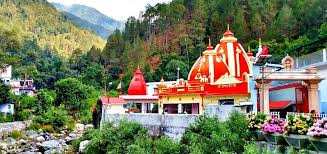
Kainchi Dham.
Kainchi Dham (कैंची धाम) is a spiritual ashram and temple complex located in the Kumaon region of Uttarakhand, Tourist places in India. Founded and inspired by the saint Neem Karoli Babait has today become a major pilgrimage destination, attracting devotees and seekers of peace from across India and abroad.https://www.holidify.com/
Visiting Information
How to reach:
By Air: The nearest major airport is Pantnagar, about 79 km from Kainchi Dham Tourist places in India. kumaon.gov.in+1
By Rail: Kathgodam, the nearest major railway station, lies about 38–43 km away.
From there, one travels by road. Tourist places in India.
By Road: Motorable roads connect the ashram; the hair‑pin bends on the road (that shape the name) are part of the approach. From Nainital, Bhowali, etc., one can take shared taxis or buses. Tourist places in India.
Accommodation:
-
-
Facilities are modest, with shared bathrooms.
Your sentence seems to mix two ideas, but if we rewrite it correctly in active voice, it would be:
👉 “Neem Karoli Baba motivates all young people.”
Would you like me to make it sound more natural or spiritual (e.g., suitable for an article or caption)?
- Kanchi Dham Or Neem Karoli Baba Dham is best rilex place. It is the Best tourist places in india.
-
Best time to visit:
Summer (March‑June): Pleasant weather, good time to travel.
Monsoon (July‑September): Heavy rains possible, landslides or road issues can occur. Travel may be more difficult.
Winter (October‑February): Quite cold, sometimes snow; fewer crowds, quieter atmosphere for those seeking solitude.
Visitor guidelines:
Participation in ashram rituals (aarti, seva) is welcomed. kanchiiidhamashram.com+1
Neem karolu baba is the best motivenal godfather. He is one of the gifts of God.
He is the face of lod Hmnuma ji.
2. Kedarnath Dham
Kedarnath Dham: The Sacred Abode of Lord Shiva
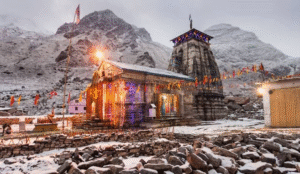
Nestled high in the Garhwal Himalayas, Kedarnath Dham (or Kedarnath Temple) is one of the most venerated pilgrimage sites in Hinduism. Dedicated to Lord Shiva, it is a place where faith, myth, nature and perseverance meet in an awe‑inspiring landscape. This article explores everything you need to know about Kedarnath, from its origins and spiritual importance to how to plan a pilgrimage there.
-
Legends of the Pandavas
According to Hindu tradition, after the great Mahabharata war, the Pandava brothers sought Lord Shiva’s forgiveness for having killed their kin. Shiva eluded them, appearing first as a bull (or buffalo) and submerging himself. Only his hump remained at the site that is now the temple. The Pandavas tried to catch him but Shiva vanished. This hump (known as the keda or hump) is worshipped as Sadashiva in the sanctum. -
Panch Kedar
Kedarnath is the foremost of the Panch Kedar temples—five sacred sites associated with parts of Shiva’s body as per the legend. After Kedarnath (hump), the other temples are Tungnath (arms), Rudranath (face), Madhyamaheshwar (navel) and Kalpeshwar (hair). Pilgrims often follow this circuit to complete a full reverence of Shiva’s manifestation. -
Revival by Adi Shankaracharya
The temple has been attributed to the great 8th‑century philosopher‑saint Adi Shankaracharya, who is said to have revived several ancient temples across India and formally integrated Kedar (Kedarnath) into the pilgrimage map. He is also believed to have attained samadhi (final meditative state) near Kedarnath. -
Jyotirlinga Status & Char Dham
Kedarnath is counted among the 12 Jyotirlingas (shrines where Lord Shiva is worshipped in the form of a lingam, regarded as very sacred). It is also part of the Char Dham Yatra of Uttarakhand (comprising Yamunotri, Gangotri, Kedarnath and Badrinath), which many Hindus aim to complete for spiritual merit.
3. Rishikesh.
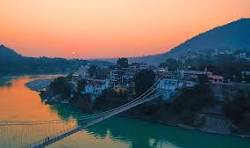
Rishikesh (sometimes spelled Hrishikesh) is a city in the Dehradun district of Uttarakhand, northern India. It lies in the foothills of the Himalayas, along the right bank of the Ganges (Ganga) River. Often called the Yoga Capital of the World, it is also a major pilgrimage town for Hindus. It serves as a gateway to the high Himalayas and the Char Dham pilgrimage circuit (Yamunotri, Gangotri, Kedarnath, Badrinath). Encyclopedia Britannica+2Wikipedia+2
The city is known for its ashrams, temples, daily ritual life (especially the Ganga Aarti at ghats), and also for adventure sports — rafting, trekking, bungee jumping etc. Tourists come not only seeking spiritual peace but also natural beauty, thrills, river‑stream experiences, and yoga/wellness retreats. Uttarakhandi+2tourism-of-india.com+2
Rishikesh is also a vegetarian-only and alcohol‑prohibited city by law, aligning with its spiritual identity.
Etymology
-
The name Hrishikesh comes from Sanskrit, where hṛṣīka means senses or sensory organs and īśa means lord or master — thus “Lord of the Senses.” Encyclopedia Britannica+1
-
Another interpretation links it with the sage Raibhya Rishi, who performed tapasya (penance) here. Pleased with his devotion, Lord Vishnu appeared before him and granted him the name Hrishikesh for mastering the senses. This myth is referenced in local Puranic literature. Kuchewar+2Encyclopedia Britannica+2
Mythological Significance
-
It is believed that Lord Rama came to Rishikesh to atone for killing Ravana, the demon‑king of Lanka, following the Ramayana tradition. His brother Lakshmana is said to have crossed the river at the spot of Lakshman Jhula using two jute ropes. Thus many places and bridges carry the names of Ram and Lakshman. rishikesh.uttarakhandonline.in+2uttarakhandtrip.com+2
-
The Skanda Purana speaks of this region as part of Kedarkhand. The area is associated with various legends, sages, and divine appearances. Encyclopedia Britannica+1
Historical Development
-
Over centuries, Rishikesh has been under various rulers — indigenous kingdoms, later influenced by the Gorkhas, and then under British colonial rule. While not always at the center of political power, its spiritual and cultural role grew steadily. Encyclopedia Britannica+1
-
In modern times, it became internationally recognized when the Beatles visited Maharishi Mahesh Yogi’s ashram in the late 1960s. This event introduced many in the West to transcendental meditation, and Rishikesh’s reputation as a yoga & meditation center grew globally. Encyclopedia Britannica+1
-
The Divine Life Society, founded by Swami Sivananda, has its prominent base here, adding to Rishikesh’s identity as a hub for spiritual teachings and retreats.
4. Jagnath Temple
Mythology
-
The name Jagannath means “Lord of the Universe.” The legends around Jagannath are rich and varied, combining Vedic, Puranic, tribal and local elements.
-
One popular myth says that Lord Krishna (as Jagannath), when departing his mortal form, left behind a wooden form (a “daru”), which came to rest in Puri. The divine trio — Jagannath, his elder brother Balabhadra, and sister Subhadra — are worshipped in wood (neem/daru).
-
Another myth links King Indradyumna, an ancient ruler, who desired to build a temple for the Lord, and with help from divine forces, found the divine images and built the first temple. Many later legends combine tribal worship of wooden deities with Brahminical Vaishnava tradition.
Historical Origins
-
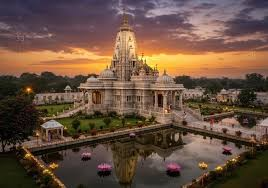
The present temple was built in the 12th century AD by King Anantavarman Chodaganga of the Eastern Ganga dynasty. Successors continued additions, repairs and embellishments over the centuries. Jagannath+3Puri Odisha+3Odisha Tourism+3
-
The Jagannath Temple is part of Odisha’s rich temple architecture tradition. It stands at the heart of the “Jagannath cult,” which influences many aspects of Odia culture, literature, art, and society. Odisha Tourism+2Incredible India+2
-
While the main sanctum is 12th century, many portions of the complex, including mandapas, halls, enclosures, and subsidiary shrines, saw medieval and later expansions (some till 16th century) as temple patronage and pilgrimage grew.
The Deities & Symbolism
-
The primary deities are Lord Jagannath, Balabhadra (his elder brother), Subhadra (his sister), and Sudarshan (his chakra/suderch weapon). Also, deities of Madhava, Sridevi, Bhudevi are sometimes associated. Jagannath+1
-
The idols are made of neem wood (“daru”), not stone or metal. They are regularly replaced (through the ritual of Nabakalebara) once in several years when the corresponding lunar calendar permits. This symbolizes renewal, impermanence, the idea of divine life force (Brahma) being transferred. Jagannath+1
-
The Ratna Vedi, the jewelled pedestal, is where these deities are seated in the sanctum sanctorum (Vimana). Devotees do darshan (viewing) from the adjacent Jagamohana hall, since access to the inner sanctum is restricted.
5. Jaisalmer
Historical Origins & Etymology
-
Founding and Name: Jaisalmer was founded in 1156 CE by Rawal Jaisal Singh, a Bhati Rajput ruler. The name Jaisalmer is derived from “Jaisal” (his name) and “mer,” which might refer to “lake” or water bodies in old local languages (though the region is desert). Some sources translate “mer” as “sandstone hill” or “ridge.” Over time, Jaisal’s fortress and settlement grew into what is now the city. Rajasthan Tourism+2Encyclopedia Britannica+2
-
Strategic Role & History: Because of its position in the Thar Desert, on trade routes between India and Central/West Asia (and former caravan routes to Persia and Arabia), Jaisalmer had strategic importance. The fort and city guarded western frontiers. Over centuries, it has weathered invasions, sieges, alliances with the Delhi Sultanate, Mughal suzerainty, and later British influence. Encyclopedia Britannica+2Rajasthan Tourism+2
-
Political Transitions: Its rulers (the Bhati dynasty) retained local power even as larger empires influenced the region. After Indian independence, Jaisalmer joined the Indian state of Rajasthan in 1949.
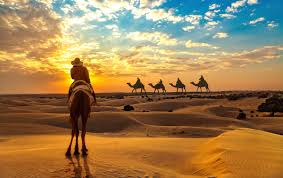
Geography, Climate & Landscape
-
Location: Jaisalmer is located in the far western side of Rajasthan, India. It shares proximity with the international border with Pakistan and is bordered by districts like Barmer. The desert environment dominates. rajasthantourplanner.com+2Rajasthan Tourism+2
-
Thar Desert: The city is often described as the gateway to the Thar Desert, and its landscapes are shaped by sand dunes, arid plains, sparse vegetation (xerophytic shrubs), occasional lakes or tank‑systems (like Gadisar), and very little perennial surface water. Rajasthan Tourism+2Wikipedia+2
-
Climate: Extreme; hot summers, cooler winters, very low rainfall. Summers (April‑June) can be scorching, often exceeding 45°C; monsoons bring brief rains (though erratic); winters (November‑February) are pleasant during the day but cold at night. Desert climate means big diurnal temperature swings. Dry air, dramatic skies. jaisalmertourism.com+2Encyclopedia Britannica+2
-
Natural Features: Apart from dunes and arid terrain, there are interesting geological sites like the Akal Wood Fossil Park, about 17‑18 km from Jaisalmer city. Fossilized tree trunks, plant species, and other early Jurassic lifeforms are found. Wikipedia+1
3. Architecture & Heritage
One of Jaisalmer’s greatest draws is its architecture: living forts, ornate havelis, temples carved from golden sandstone, chhatris and colorful alleys.
-
Jaisalmer Fort (Sonar Quila / Golden Fort)
The iconic crown of the city: built in 1156 by Rawal Jaisal. The massive yellow sandstone walls glow gold in sunlight, especially at dawn or dusk. It is one of the few “living forts” in India — people still live inside along with shops, residences, temples etc. The fort has gates, ramparts, balconies, narrow winding lanes, palaces, administrative buildings, retail shops, and temples. Rajasthan Tourism+2Wikipedia+2 -
Palaces & Havelis
Several havelis (mansions) built by wealthy merchants over the centuries show intricate craftsmanship: Patwon Ki Haveli, Nathmal Ki Haveli, Salim Singh Ki Haveli. These have ornate facades, jharokhas (overhanging balconies), lattice work, carved pillars etc. They vividly show merchant wealth, architecture adapted to desert climate (thick walls, small windows, courtyards). Rajasthan Tourism+1 -
Jain Temples
Within Jaisalmer Fort, there are several Jain temples constructed between 12th and 15th centuries. They have exquisitely carved interiors, pillared halls, toranas, detailed carvings, often in marble or light stone contrasting the sandstone. These are peaceful, architectural gems. Rajasthan Tourism+1 -
Gadsisar (Gadisar) Lake
A man‑made lake, historically an important water source. The shores have ghats, old temples, pavilions. In the dry desert this lake adds serenity, reflections of architecture, migratory birds etc. Rajasthan Tourism+1 -
Bada Bagh & Cenotaphs (Chhatris)
A complex of chhatris (royal cenotaphs) of former Maharajas in a garden setting outside the main town. The architecture, symmetry, carvings are photogenic particularly at sunset. Rajasthan Tourism+1 -
Other Heritage Sights
Abandoned villages like Kuldhara (about 18km away) which hold mystery and history; the War Museum; folk architecture; forts, temples etc.

thanks for sharing this informative content hope we get more article like this in future.